
Mold Remediation McKinney TX
McKinney presents a mold challenge that is unusual even within North Texas: a city where homes from the 1950s sit within a few miles of subdivisions built last year, and where the moisture risks in each are genuinely different. In the city’s older established neighborhoods, particularly near the historic downtown core, aging galvanized and polybutylene plumbing systems and original attic insulation create conditions where slow leaks and moisture accumulation go undetected for months. In McKinney’s newer developments toward Prosper and beyond, slab foundations on Collin County clay soils and HVAC systems managing significant humidity loads create a different but equally real mold pathway. Both produce the same outcome: mold growing inside building materials, out of sight, affecting the air quality of the home and degrading the structural materials it occupies.
Mold is not a maintenance issue you can defer. Active growth releases spores and microbial compounds into the indoor air continuously, creating health risks for occupants and expanding the scope of contamination in the building materials it inhabits. Rush Dry Restoration provides professional mold remediation and mold removal services throughout McKinney. We perform mold inspection in McKinney and full remediation, managing the complete process from source identification through containment, removal, treatment, and verification. If you have mold in your McKinney property, the correct step is professional assessment and remediation, not a wait and see approach.
What Is Mold Remediation?
Why Mold Removal in McKinney Requires Professional Handling
Disturbing mold without containment spreads it
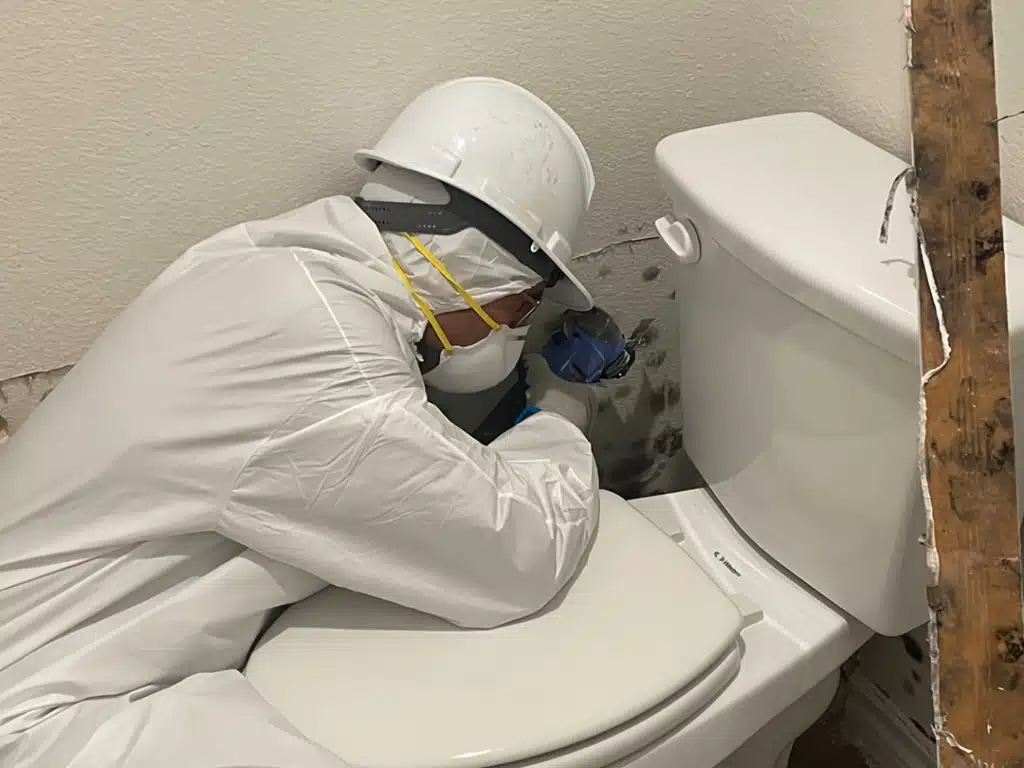
Mold colonies release spores when disturbed. Without physical containment barriers and negative air pressure systems in place before any removal begins, those spores become airborne and migrate to unaffected areas of the property through HVAC systems, open doorways, and air movement. In McKinney’s older homes, where wall cavities and attic spaces may be loosely connected to living areas, uncontained removal can distribute contamination from a single bathroom into multiple rooms. This is the most common reason DIY mold attempts require more extensive professional remediation than the original scope would have needed.The visible mold in a McKinney home is rarely the full extent
In McKinney’s older established neighborhoods, slow plumbing leaks and slab moisture migration typically produce extensive mold growth inside wall and floor assemblies well before any surface indication appears. In newer developments, HVAC condensation issues and insulation gaps create hidden moisture conditions with the same result. What a homeowner sees on the surface, a stain or a patch of discoloration, is frequently the surface expression of a much larger hidden condition. Professional mold inspection in McKinney with moisture detection equipment establishes the actual extent before remediation scope is set, preventing both incomplete treatment and unnecessary removal of unaffected materials.Mold recurs without moisture correction
Removing contaminated materials without correcting the moisture source that produced the mold guarantees recurrence. In McKinney, the most common recurring scenarios involve slab leaks that were repaired but not followed by professional drying and mold assessment, roof leaks that continued intermittently after initial water damage was addressed, and aging plumbing failures that were fixed without verifying the extent of moisture damage in adjacent materials. Rush Dry identifies and requires correction of the moisture source as part of every remediation scope.For official guidance on recognizing and controlling mold hazards and protecting indoor air quality during cleanup and remediation, see the OSHA mold overview and control guidance, which outlines best practices for preventing exposure and ensuring safe handling of mold contamination.
Common Causes of Mold in McKinney Homes
Aging plumbing in established neighborhoods
McKinney’s older neighborhoods contain homes with plumbing systems that are decades past their intended service life. Galvanized steel pipes corrode from the inside progressively, narrowing flow capacity and weakening pipe walls until a section fails without warning. Polybutylene pipe, installed widely from the mid-1970s through the mid-1990s, is known to become brittle and crack unpredictably regardless of water pressure. These failures develop quietly inside wall cavities and introduce continuous moisture into drywall, framing, and insulation before any surface evidence appears. Mold growth in these materials is often well established by the time the leak is discovered.
Slab leaks
Slab foundations are standard throughout McKinney, and the Collin County clay soils beneath them shift seasonally with moisture variation. Supply lines embedded in or routed beneath the concrete are subject to that accumulated stress over time. When a slab-embedded line cracks or separates at a joint, water migrates upward through the concrete and into flooring, baseboards, and lower wall assemblies above, often for weeks or months before the source is found. By then, mold in the affected flooring and wall materials is frequently established and requires professional remediation. Any McKinney property with slab leak history that was not followed by documented moisture verification and a professional mold assessment should be considered at elevated risk for hidden mold growth.
Water damage events
Plumbing failures, appliance malfunctions, storm water intrusion, and roof leaks introduce moisture into building materials that produce mold when not professionally dried within the first 24 to 48 hours. McKinney properties that received surface-only drying after a water event, or where emergency water removal services were used but formal structural drying with documented moisture readings was not completed, are among the most consistent mold remediation referrals we receive. Professional water damage restoration in McKinney with confirmed structural drying is the prevention; mold remediation is what follows when that step was skipped.
Roof leaks
North Texas storm events bring hail, high winds, and heavy rain that compromise roofing systems across McKinney regularly. When a roof is breached, water saturates attic insulation, wood sheathing, and framing. Attic mold develops quickly in saturated conditions and typically goes undetected until a renovation, real estate inspection, or persistent musty odor brings it to light. In McKinney’s older homes where original roofing materials may be nearing or past the end of their service life, storm-related roof damage is a consistent mold risk factor.
HVAC systems and humidity
HVAC systems working through McKinney’s long, humid summers manage significant indoor moisture loads. Blocked condensate drain lines, condensation on ductwork in unconditioned attic spaces, and air handlers that cannot adequately dehumidify the space introduce chronic moisture into wall and ceiling assemblies surrounding HVAC components. In McKinney’s newer developments, particularly those near Prosper and Frisco, where homes are built tightly and HVAC systems carry the full humidity burden, equipment that underperforms even modestly can produce conditions that sustain mold growth.
Growth-related infrastructure stress
McKinney’s pace of residential development over the past decade has introduced its own set of moisture risks. Construction at high volume and high speed creates opportunities for installation defects at plumbing fittings and joints, inadequate pipe support, and insulation gaps around vapor barriers that allow humid air to reach cold surfaces inside wall assemblies. Homes in McKinney’s newest subdivisions may experience moisture-related mold problems that trace back to construction-phase defects rather than aging materials or weather events.
Our Mold Remediation Process in McKinney
Rush Dry Restoration follows a structured water damage restoration process designed to reduce uncertainty and maintain control from first response through completion.
Step 1: Inspection and scope assessment
Step 2: Containment setup
Step 3: HEPA air filtration
Step 4: Mold removal
Step 5: HEPA vacuuming and surface treatment
Step 6: Structural drying and prevention
Residential Mold Remediation in McKinney
McKinney’s residential mold problems reflect the city’s dual character. In the older established neighborhoods near the historic district and central McKinney, the dominant mold sources are aging plumbing failures, slab leaks, and roof damage in homes that carry original or near-original building systems. In the newer subdivisions expanding toward Prosper, Allen, and Frisco, the dominant sources shift toward HVAC humidity issues, construction-related moisture defects, and slab leaks in foundations still adjusting to Collin County’s expansive clay soils. Rush Dry addresses both conditions throughout McKinney daily. The most common residential mold locations we address in McKinney include attic spaces following storm damage or ventilation failures, bathroom walls and ceilings with inadequate exhaust ventilation, wall cavities adjacent to aging supply line runs, and floor and baseboard assemblies in homes with slab leak history. Many of these properties have had prior water damage restoration in McKinney but no subsequent mold assessment, and the mold developed in the weeks and months that followed while the moisture in concealed materials was never fully confirmed to have cleared.Commercial Mold Remediation in McKinney
McKinney’s commercial sector has expanded alongside its residential growth, adding office parks, retail centers, restaurant pads, and apartment communities throughout the city’s developing corridors. Commercial mold problems carry operational, liability, and regulatory dimensions that go well beyond the physical remediation work. Tenant indoor air quality obligations, lease considerations, and compliance requirements shape how commercial mold issues must be handled. Rush Dry provides professional mold remediation for commercial properties throughout McKinney’s business and mixed-use areas.
Commercial remediations are structured to minimize disruption to tenants, staff, and daily operations while gathering complete information about conditions and executing the work thoroughly. Property managers and building owners receive clear documentation of mold conditions, remediation scope, and completed work supporting insurance coordination, tenant communication, and regulatory compliance. Where structural restoration is required following remediation, Rush Dry also handles reconstruction services after mold damage to return affected areas to full operating condition.
Signs You Need Mold Remediation in McKinney
These are the most common indicators that professional mold remediation is warranted in a McKinney property:
Mold Remediation in McKinney and Surrounding North Texas Communities
Why Choose Rush Dry for Mold Remediation in McKinney
We work in McKinney every day
Rush Dry provides active mold remediation services throughout McKinney alongside our mold inspection in McKinney and water damage restoration in McKinney services. We understand the specific conditions driving mold in both McKinney’s older established neighborhoods and its newest subdivisions and we bring the right scope to each.
Professional containment and HEPA filtration on every project
Physical containment barriers, negative air pressure systems, and HEPA filtered air scrubbers are standard on every remediation we execute. These are not optional add-ons. They are the tools that determine whether remediation resolves the contamination or spreads it, and they are in place before the first piece of material is removed.
Advanced moisture detection for confirmed drying
Thermal imaging cameras and calibrated moisture meters are part of every inspection and post-drying verification we perform. In McKinney homes where concealed moisture in wall assemblies or beneath flooring has no visible surface expression, equipment-based detection is the only reliable way to confirm that affected materials are fully dry before reconstruction begins.
Inspection through reconstruction from one team
Rush Dry handles the complete scope: mold inspection in McKinney, professional remediation, and reconstruction services after mold damage to restore affected areas once the mold is removed. One team manages the process from identification through completion, with no coordination gaps and no re-explanation at each stage.
Schedule Mold Remediation in McKinney Today
Mold does not resolve without professional intervention. In McKinney’s older homes, untreated mold expands steadily through aging building materials. In newer construction, it spreads through HVAC systems and tight assemblies. Neither gets better with time.
Rush Dry Restoration provides professional mold remediation for residential and commercial properties throughout McKinney, Plano, Frisco, Allen, Prosper, and all of North Texas.
Call (214) 556-8540 to schedule mold remediation in McKinney.

Frequently Asked Questions About Mold Remediation in McKinney
What should I do immediately after a sewage backup?
Is mold dangerous in a McKinney home?
Active mold growth releases spores and microbial volatile organic compounds into the indoor air. Exposure can cause respiratory irritation, allergy symptoms, and other health effects, particularly in children, older adults, and individuals with existing respiratory conditions. In McKinney’s older homes, where wall cavities and attic spaces may have accumulated mold growth over extended periods, spore concentrations in the living space can be significant. A professional mold inspection in McKinney establishes the actual conditions at your property and provides the documented basis for remediation decisions.