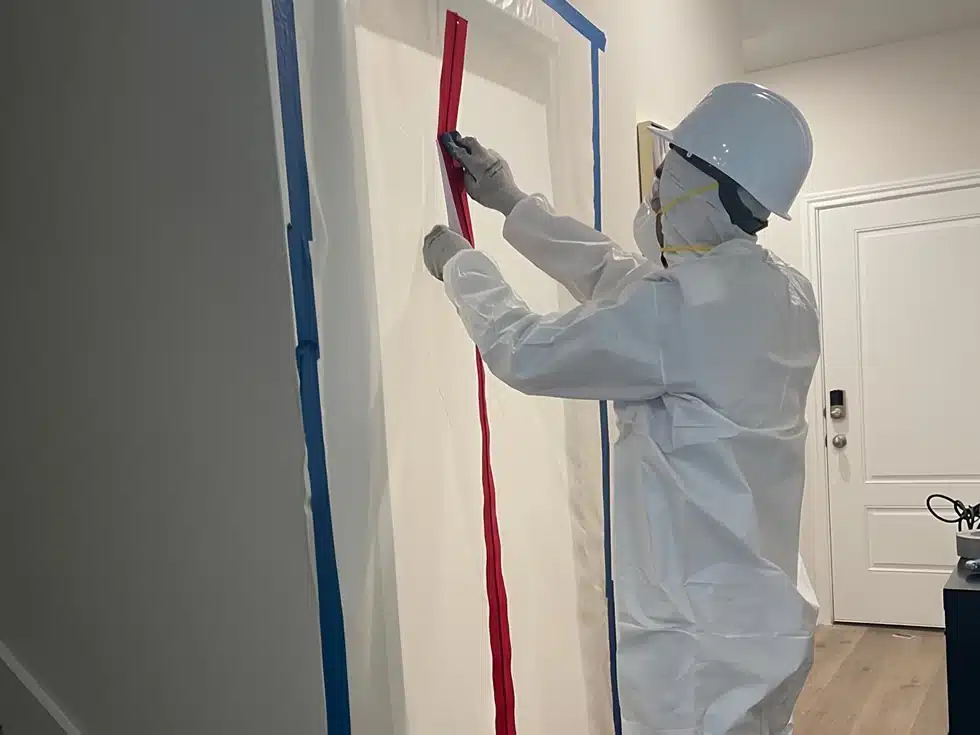
Mold Inspection and Mold Testing
in Dallas–Fort Worth
Rush Dry Restoration provides professional mold inspection, mold testing, and moisture investigation services for residential and commercial properties throughout Dallas–Fort Worth. The region’s climate, characterized by high humidity, significant rainfall, and temperature fluctuations, creates conditions that make mold growth a realistic concern for many properties. Whether you have identified a visible problem, noticed unexplained odors, or recently experienced water damage, mold inspection in Dallas–Fort Worth is the appropriate first step before remediation work begins. Guessing at the scope of a mold problem without professional evaluation leads to incomplete treatment and recurring issues.
Call for Emergency Mold Inspection
A mold inspection is a structured, professional evaluation of a property to determine whether mold is present, where it is located, what conditions are supporting its growth, and what steps are appropriate to address it. It is distinct from remediation; inspection and mold testing come first, establish the facts, and inform the remediation plan.
Professional mold inspection services involve visual inspection of accessible areas, moisture detection using specialized equipment, identification of mold growth where present, and air or surface sampling when mold testing is warranted. The findings are compiled into a written report that documents conditions observed, areas of concern, potential moisture sources, and recommendations for next steps.
For property owners, professional mold inspection services provide clarity in situations that can otherwise feel overwhelming or uncertain. They establish a factual baseline, support insurance and real estate transactions where mold disclosure is relevant, and ensure that any remediation work addresses the actual scope of the problem rather than assumptions about it.
Common Causes of Mold Growth in Dallas–Fort Worth
Mold requires moisture to grow. Understanding the sources of moisture that support mold development helps property owners identify vulnerabilities before they become significant problems.
Water damage is one of the most direct causes of mold growth. Whether from a burst pipe, appliance failure, or storm intrusion, properties that require water damage restoration services are at increased risk for mold development if moisture is not fully removed.
Plumbing leaks — particularly slow leaks behind walls, under sinks, or beneath slabs — introduce persistent moisture into building materials without producing obvious visible signs. By the time a leak is discovered, mold growth may already be present in the affected area.
Roof leaks allow water to enter attic spaces and saturate insulation, decking, and framing. Attic mold is a common finding in properties where roof integrity has been compromised, often going undetected until a mold inspection reveals the extent of the problem.
Humidity and condensation contribute to mold growth in spaces with inadequate ventilation or climate control. Crawlspaces, bathrooms, laundry areas, and HVAC systems are particularly vulnerable to moisture accumulation from condensation, especially during Dallas–Fort Worth’s humid summer months.
Poor ventilation in enclosed spaces prevents moisture from dissipating naturally. Combined with any of the above moisture sources, inadequate airflow accelerates mold development and allows growth to spread more rapidly through building materials.
Our Mold Inspection and Assessment Process
Rush Dry Restoration follows a structured inspection process designed to accurately characterize mold conditions and provide property owners with clear, actionable findings.
Step 1: Visual Inspection
The process begins with a systematic visual inspection of accessible areas throughout the property. Inspectors examine areas known to be high-risk for mold development — bathrooms, kitchens, utility spaces, attics, crawlspaces, and areas with known or suspected water intrusion history. Visible mold growth, staining, and deterioration of building materials are documented as part of the inspection record.
Step 2: Moisture Detection
Visual inspection alone does not reveal the full picture. Professional moisture detection equipment, including thermal imaging cameras and calibrated moisture meters, allows inspectors to identify elevated moisture levels inside wall assemblies, beneath flooring, and in other concealed areas where mold conditions may exist without visible surface evidence. Moisture mapping at this stage helps establish the relationship between water intrusion sources and areas where mold growth is likely.
Step 3: Mold Growth Identification
Where mold growth is identified, either visually or through moisture investigation, the affected materials and areas are documented in detail. The type of surface, extent of visible growth, and surrounding conditions are recorded to support accurate scope development for any remediation work that follows.
Step 4: Air Quality Testing
Step 5: Assessment Report and Recommendations
Residential Mold Inspection
Mold concerns in residential properties are common across Dallas–Fort Worth, and the areas most frequently affected tend to be those where moisture exposure is routine or where water damage has occurred previously. Bathrooms and kitchens present ongoing moisture exposure from daily use. Attics accumulate moisture from roof leaks, ventilation issues, and condensation. Crawlspaces in older homes are frequently affected by ground moisture and inadequate vapor barriers. Wall cavities adjacent to plumbing or exterior surfaces may harbor growth long before any visible signs appear inside living spaces.
Homeowners often contact Rush Dry following a musty odor they cannot locate, after discovering discoloration on walls or ceilings, or following water damage that was addressed but not professionally dried. In each case, professional mold inspection services provide the factual foundation needed to determine whether remediation is necessary and what scope of work is appropriate.
Commercial Mold Inspection Services
Mold in a commercial property carries implications beyond the physical damage. Tenant complaints, liability concerns, indoor air quality obligations, and regulatory considerations all factor into how commercial mold problems are managed. Rush Dry Restoration provides professional mold inspection services for office buildings, apartment complexes, retail spaces, warehouses, and other commercial properties throughout Dallas–Fort Worth.
Commercial inspections are conducted with attention to operational continuity, minimizing disruption to tenants and building operations while gathering the information needed for accurate scope development. Property managers and building owners receive clear, documented findings that support remediation planning, tenant communication, and insurance coordination.
Serving the Entire Dallas–Fort Worth Area
Rush Dry Restoration provides mold inspection and mold testing services throughout the Dallas–Fort Worth metroplex. Our team responds to properties across the region, including Dallas, Plano, Frisco, Allen, McKinney, Richardson, Garland, and Carrollton, as well as surrounding communities throughout North Texas.
Our regional coverage allows us to schedule mold inspections efficiently across a wide service area, with consistent professional standards regardless of location.
Signs You May Need a Mold Inspection
- Musty odors that persist despite cleaning or ventilation are one of the most reliable indicators of hidden mold growth. The odor is produced by microbial volatile organic compounds released during active mold activity.
- Visible mold growth on any surface — regardless of size — warrants a professional mold inspection to determine whether the visible area represents the full extent of the problem or the surface expression of a larger hidden condition.
- Recent water damage that was not professionally dried is a high-risk situation for mold development. Even water damage that appears to have dried on the surface may have left moisture in wall cavities and structural materials that can support mold growth.
- Allergy symptoms indoors — such as persistent respiratory irritation, sneezing, or eye sensitivity that improve when leaving the property — may indicate elevated mold spore concentrations in the indoor environment.
- Unexplained humidity or moisture issues including condensation on interior surfaces, warping of wood materials, or persistent dampness in certain areas suggest underlying moisture conditions that should be evaluated before mold development occurs or expands.
Schedule a Mold Inspection
Rush Dry Restoration provides professional mold inspection and mold testing services for residential and commercial properties throughout Dallas–Fort Worth.
Call (214) 556-8540) to schedule a mold inspection and get the accurate, documented information you need to move forward with confidence.

Why Choose Rush Dry Restoration
- Experienced mold inspection professionals — Our team brings field experience in identifying mold conditions across a wide range of property types and construction styles common throughout Dallas–Fort Worth.
- Advanced moisture detection equipment — Thermal imaging and professional moisture meters allow us to identify moisture conditions and potential mold growth in concealed areas that visual inspection alone cannot reveal.
- Clear reporting and recommendations — Every mold inspection produces a written report with documented findings, moisture data, and specific recommendations. Property owners receive actionable information, not vague conclusions.
- Fast response across Dallas–Fort Worth — We understand that mold concerns create urgency. Our scheduling covers properties throughout the metroplex with efficient response times and clear communication from initial contact through report delivery.
Mold growth can pose serious health risks and often develops in hidden areas of a property. For guidance on understanding mold and its potential effects, the Centers for Disease Control and Prevention (CDC) provides helpful information on mold exposure and prevention learn more here. Professional mold inspection in Dallas–Fort Worth ensures that hidden mold is accurately identified and addressed before it causes further structural or health issues.