
Mold Remediation in
Dallas–Fort Worth
Rush Dry Restoration provides professional mold remediation and mold removal services for residential and commercial properties throughout Dallas–Fort Worth. The region’s climate, with high humidity, seasonal rainfall, and temperature swings, creates persistent conditions that support mold growth in properties where moisture problems go unaddressed. Whether mold has developed following water damage, a slow plumbing leak, or long-term humidity issues, professional remediation requires proper containment protocols, appropriate removal techniques, and verification that affected materials have been treated correctly. Attempting mold cleanup without professional equipment and containment can spread spores throughout unaffected areas of the property, worsening the problem rather than resolving it. Mold remediation in Dallas–Fort Worth requires a structured, professional approach from start to finish.
Professional Mold Remediation Services
In most cases, remediation begins after a professional mold inspection confirms the presence and scope of contamination. Mold remediation and mold inspection are related but distinct services. A mold inspection identifies whether mold is present, where it is located, and what moisture conditions are supporting its growth. Mold remediation is the physical process of containing, removing, and treating mold-affected materials based on the findings of that inspection.
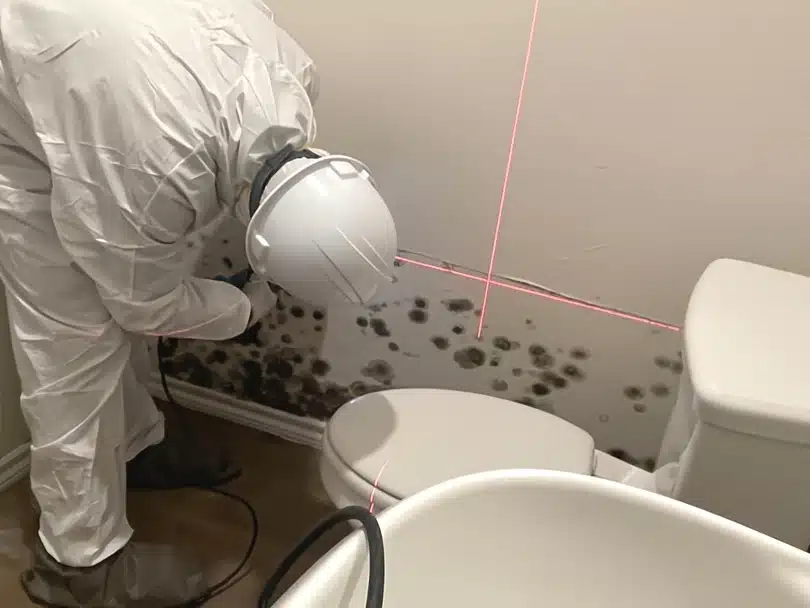
Professional mold remediation services involve establishing containment barriers to prevent cross-contamination, removing affected materials that cannot be adequately cleaned, treating remaining surfaces with appropriate antimicrobial agents, and verifying through post-remediation evaluation that the work has been completed successfully. The goal is not simply to remove visible mold, it is to address the full scope of contamination, treat underlying materials, and eliminate the conditions that allowed mold to grow in the first place. Without a professional approach, mold problems frequently return.
Why Mold Removal Requires Professional Containment
Mold spreads through spores, microscopic particles that become airborne when mold colonies are disturbed. According to the Centers for Disease Control and Prevention, mold exposure can impact indoor air quality and may cause health symptoms in sensitive individuals. Without proper containment, the process of removing mold can release large quantities of spores into the air, carrying contamination into areas of the property that were previously unaffected. This is one of the most common reasons DIY mold cleanup fails and why professional containment is not optional; it is the foundation of effective mold removal.
Professional mold remediation uses physical containment barriers, negative air pressure systems, and HEPA filtration to isolate the work area and prevent spore migration during the removal process. Air scrubbers run continuously to capture airborne particles before they can travel to uncontaminated areas. Technicians follow established protocols for protective equipment and material handling to ensure that the remediation process does not create secondary contamination. Improper cleanup, even well-intentioned attempts, regularly results in broader contamination that requires more extensive professional remediation to resolve.
Our Mold Remediation Process
Properties that require water damage restoration services often develop mold if moisture is not fully removed during the drying process.
Rush Dry Restoration follows a structured, professionally executed remediation process designed to address mold contamination thoroughly and prevent recurrence.
Step 1: Visual Inspection
Step 2: Containment and Air Filtration
Step 3: Mold Removal and Material Cleaning
Step 4: HEPA Vacuuming and Surface Treatment
Step 5: Structural Drying and Prevention
Residential Mold Inspection
Mold in a home affects not just the structure but the daily living environment of its occupants. Bathrooms with inadequate ventilation, attics with roof leak history, crawlspaces with moisture infiltration, and wall cavities adjacent to plumbing failures are among the most common locations for residential mold growth in Dallas–Fort Worth.
Rush Dry Restoration approaches residential mold remediation with attention to both technical thoroughness and the practical realities of working in an occupied or recently vacated home. Containment is established to protect living areas during the remediation process. Communication throughout the project ensures homeowners understand what is being done, why it is necessary, and what to expect during and after remediation. From contained bathroom mold to more extensive growth following undetected water damage, the remediation process follows the same professional standards regardless of scale.
Commercial Mold Remediation
Commercial mold problems carry operational, liability, and regulatory dimensions that require careful coordination alongside the physical remediation work. Office buildings, apartment complexes, retail locations, warehouses, and other commercial facilities each present unique access, scheduling, and occupancy considerations that affect how remediation is planned and executed.
Rush Dry Restoration provides professional mold remediation services for commercial properties throughout Dallas–Fort Worth. We work with property managers, building owners, and facility operators to coordinate remediation in a way that minimizes disruption to tenants and operations where possible. Clear documentation of conditions, scope, and completed work supports insurance coordination, tenant communication, and regulatory compliance as applicable to the specific property and situation.
Preventing Mold Growth After Remediation
Identifying and correcting the original moisture source is the first and most critical step. Whether that source was a plumbing leak, roof damage, HVAC condensation, or inadequate ventilation, the underlying condition must be resolved before or during remediation. Properties where the moisture source is not corrected will experience recurring mold growth regardless of how thorough the initial remediation was.
Ongoing prevention measures include maintaining appropriate indoor humidity levels, ensuring adequate ventilation in moisture-prone areas such as bathrooms and crawlspaces, inspecting plumbing and roofing systems regularly, and addressing any water intrusion promptly with professional drying rather than allowing materials to dry on their own over time. Properties in Dallas–Fort Worth benefit from particular attention to humidity management during the region’s warm, humid months when indoor moisture levels can rise without active climate control.
Serving the Entire Dallas–Fort Worth Area
Rush Dry Restoration provides mold remediation and mold removal services throughout the Dallas–Fort Worth metroplex. Our team responds to properties across the region, including Dallas, Plano, Frisco, Allen, McKinney, Richardson, Garland, and Carrollton, as well as surrounding communities throughout North Texas.
Our coverage across the metroplex allows us to schedule and execute mold remediation projects efficiently across a wide service area, with consistent professional standards and response times regardless of location.
Why Choose Rush Dry Restoration
- Experienced mold remediation specialists — Our team brings hands-on experience with mold remediation across a wide range of property types, moisture conditions, and contamination scopes common throughout Dallas–Fort Worth.
- Professional containment and HEPA filtration — We use established containment protocols, negative air pressure systems, and HEPA-filtered air scrubbers to protect unaffected areas of your property during the remediation process.
- Advanced remediation equipment — From professional-grade HEPA vacuums and air scrubbers to antimicrobial treatment systems and structural drying equipment, Rush Dry uses the tools required to do the job correctly.
- Insurance claim assistance — We provide thorough documentation of mold conditions, remediation scope, and completed work to support the insurance review process. Our team helps property owners understand what documentation their insurer typically requires and coordinates remediation in a way that keeps records organized.
- Fast response across Dallas–Fort Worth — Mold problems benefit from prompt attention. Our scheduling covers properties throughout the metroplex with efficient response and clear communication from initial contact through project completion.
Schedule Mold Remediation Services
Mold contamination does not resolve on its own. Without professional containment and removal, mold growth continues expanding into surrounding materials and the conditions supporting it remain in place. Rush Dry Restoration provides professional mold remediation in Dallas–Fort Worth for residential and commercial properties, with the equipment, protocols, and experience to address mold problems correctly the first time.
Call (214) 556-8540 to schedule mold remediation services. Our team is ready to assess your situation, develop an accurate scope, and begin the remediation process with the professionalism and thoroughness your property requires.